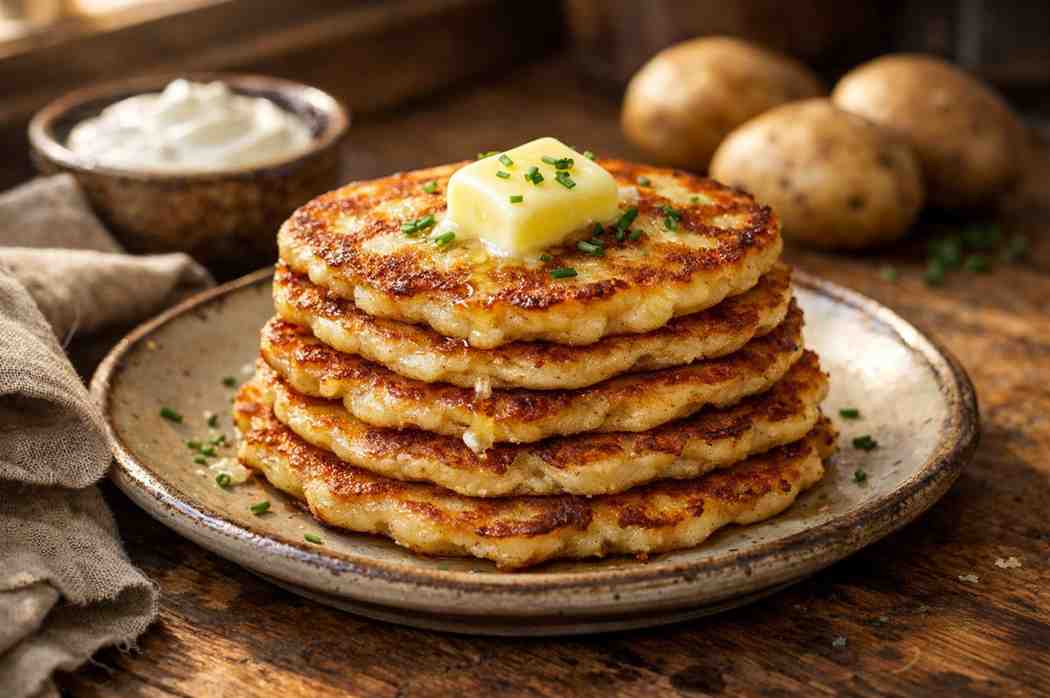
If Fårikål warms the heart of Norway, Pirozhki delights Russia, and Boxty (pronounced “bucks-tee”) is Ireland’s ultimate comfort food. With humble ingredients and a long history, Boxty has been a staple on Irish tables for generations, loved for its golden crisp exterior and tender, potato-filled interior.
A Brief History
Boxty traces its roots to the Irish countryside, particularly in the midlands and west, where potatoes were a daily staple. The dish was traditionally associated with rural peasant kitchens, making use of leftover or grated potatoes to create a filling, inexpensive meal.
The name “Boxty” is believed to come from the Irish phrase ar bháisicín, roughly meaning “poor man’s bread” or “pancake,” reflecting its humble origins. Despite its modest beginnings, Boxty has endured as a cultural icon and is celebrated in festivals and Irish cookbooks alike.
Ingredients: Simple Yet Versatile
Boxty’s magic lies in its simplicity. A few core ingredients combine to create a dish that’s comforting, hearty, and versatile:
- Basic Ingredients:
- Potatoes (both grated and mashed are commonly used)
- Flour
- Baking powder
- Salt
- Milk or buttermilk
- Butter or oil for frying
- Optional Additions:
- Onions
- Chives or herbs
- Bacon or ham (for savory versions)
- Sweet versions with sugar or honey for breakfast or dessert-style Boxty
Preparation: From Grated Potato to Golden Pancake
Boxty is traditionally made by combining grated raw potatoes with mashed potatoes, flour, and a liquid (milk or buttermilk) to form a batter. The mixture is then shaped into small patties or pancakes and fried in a skillet until golden brown on both sides.
The result is a crisp outside with a soft, creamy interior—a perfect balance of textures. Boxty can be served as a side dish, for breakfast with eggs and bacon, or as a main course with savory toppings.
Cultural Significance
Boxty is more than just a potato pancake—it’s a symbol of Irish resilience and ingenuity. In the past, when ingredients were scarce, Boxty allowed families to make filling meals with what they had on hand. Today, it’s celebrated as a traditional dish that connects modern Ireland with its culinary past.
Irish communities even hold Boxty festivals, where chefs showcase creative twists on this classic, from Boxty sandwiches to gourmet Boxty with smoked salmon or lamb stew.
Fun Facts About Boxty
- Boxty has been referenced in Irish folklore and literature, underscoring its cultural significance.
- There are multiple regional variations, such as Boxty on the griddle (fried pancakes) and Boxty boiled (cooked in water or steamed).
- Traditionally, Boxty could be made with leftover potatoes from the previous day, making it a practical dish for large families.
- In some modern recipes, Boxty is baked or turned into a Boxty casserole for convenience and creativity.
Why Boxty Endures
Boxty endures because it embodies the essence of comfort food: simple ingredients, satisfying textures, and versatility. It’s easy to make, inexpensive, and adaptable, yet deeply rooted in Irish culture.
Like Fårikål and Pirozhki, Boxty tells a story—this time of rural Irish kitchens, resilience through scarcity, and the joy of transforming simple ingredients into something extraordinary.
Final Thoughts
Exploring European comfort foods reveals the universal human desire for warmth, flavor, and connection. Norway’s Fårikål, Russia’s Pirozhki, and Ireland’s Boxty each showcase unique culinary traditions while sharing a common theme: simple ingredients, love, and shared meals.
Whether it’s a steaming bowl of lamb and cabbage, a hand-held stuffed pastry, or a golden potato pancake, these dishes remind us that food is never just about sustenance—it’s about history, culture, and the memories we make around the table.