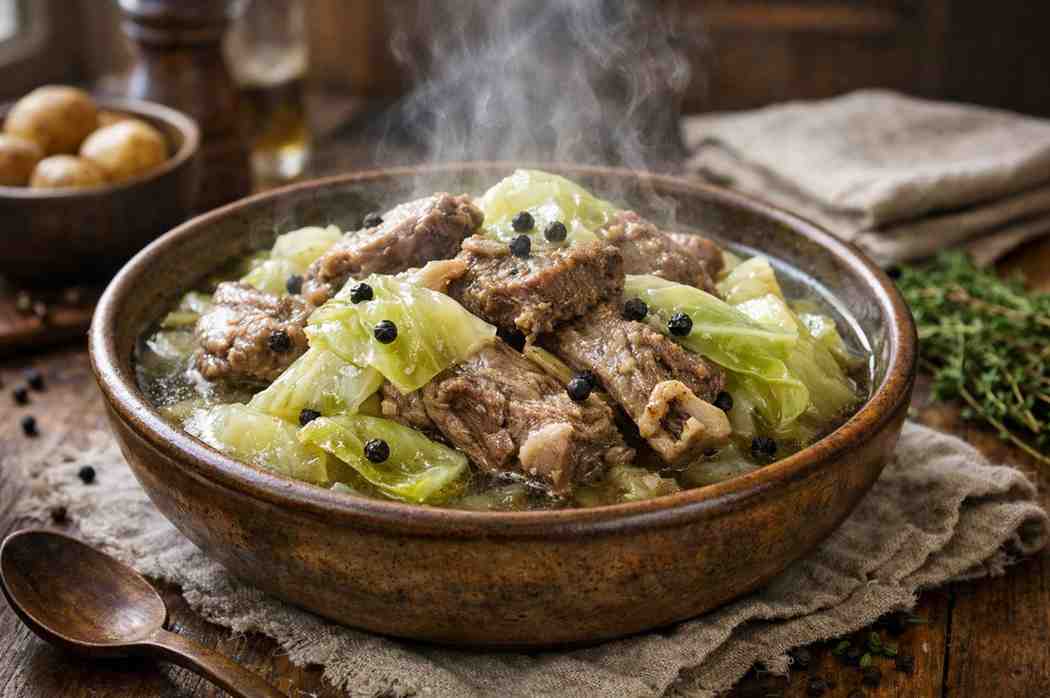
When you think of traditional Norwegian cuisine, images of fjords, mountains, and cozy wooden cabins might spring to mind. But one dish stands out not just for its taste, but for the way it embodies the Norwegian spirit: Fårikål. Often dubbed Norway’s national dish, Fårikål is a simple yet hearty stew of lamb and cabbage that warms the soul as much as it fills the belly.
A Brief History
Fårikål’s roots are humble. The dish gained popularity in Norway during the 18th and 19th centuries when lamb was a staple in rural households, particularly in the western and central regions. Its name literally translates to “mutton in cabbage,” a straightforward description of its core ingredients.
The dish’s official recognition as Norway’s national dish came in 1972, when a nationwide vote highlighted its enduring popularity. Since then, the last Thursday in September has been celebrated annually as Fårikål Day, a tribute to the dish that brings families together across the country.
Ingredients: Simplicity is Key
The beauty of Fårikål lies in its simplicity. Only a handful of ingredients are required:
- Lamb or mutton: Traditionally, fatty cuts with bones are preferred, as they add depth to the stew.
- Cabbage: Coarsely chopped, it absorbs the rich flavors of the lamb.
- Whole black peppercorns: Added generously to give the stew its distinctive aromatic kick.
- Salt: For seasoning.
- Water: Just enough to cover the ingredients and allow slow cooking.
No fancy sauces or elaborate spices are necessary. In fact, part of Fårikål’s charm is how it lets each ingredient shine.
Preparation: A Labor of Love
Fårikål is a dish that thrives on patience. The ingredients are layered in a pot—meat, cabbage, and peppercorns—then simmered slowly for several hours. This slow cooking process allows the lamb to become tender, the cabbage to soften, and the flavors to meld into a rich, savory broth.
Traditionally, Fårikål is cooked in a large pot and served straight from it, often accompanied by boiled potatoes and perhaps a slice of crusty bread to soak up the delicious juices. In some regions, it’s common to sprinkle extra pepper on top just before serving, giving it an added punch.
Cultural Significance
Fårikål isn’t just a meal; it’s a ritual. On Fårikål Day, restaurants across Norway prepare massive pots of the stew, and families gather to celebrate the season’s lamb harvest. The dish is deeply tied to autumn, as the cabbage and lamb were historically abundant at that time of year.
Interestingly, Fårikål is a dish that transcends generations. Grandparents, parents, and children all gather around the same table, passing bowls of the stew and sharing stories. It’s not just about food—it’s about continuity, tradition, and community.
Modern Twists
While traditionalists hold dear the classic recipe, some modern chefs have experimented with subtle variations. Some add a hint of juniper berries or a splash of beer to enhance the aroma, while others roast the lamb before layering it with cabbage for a deeper flavor. However, most Norwegians agree: Fårikål is best when it sticks to its roots.
Fun Facts About Fårikål
- The Guinness World Records lists the largest pot of Fårikål ever made in Norway at over 600 liters!
- Fårikål is considered so iconic that it even appears in school cookbooks and cultural exhibitions about Norwegian cuisine.
- The dish is surprisingly forgiving; leftovers are often even tastier the next day, making it a favorite for meal prep.
Why Fårikål Endures
At its heart, Fårikål endures because it represents something uniquely Norwegian: simplicity, patience, and an appreciation for natural flavors. It’s a dish that doesn’t try to impress with extravagance—it comforts, nourishes, and connects people across generations.
In a world increasingly obsessed with fusion cuisine and culinary innovation, Fårikål remains a reminder that sometimes the simplest dishes are the most meaningful. A warm pot of lamb and cabbage, simmered slowly, is not just dinner—it’s history, culture, and love in a bowl.
Final Thoughts
If you ever find yourself in Norway during late September, experiencing Fårikål in its native setting is a must. Whether in a cozy home kitchen or a bustling restaurant, the dish serves as a delicious introduction to Norwegian heritage. So gather around the table, savor the tender lamb, the sweet cabbage, and the peppery broth, and taste a slice of Norway’s culinary soul.