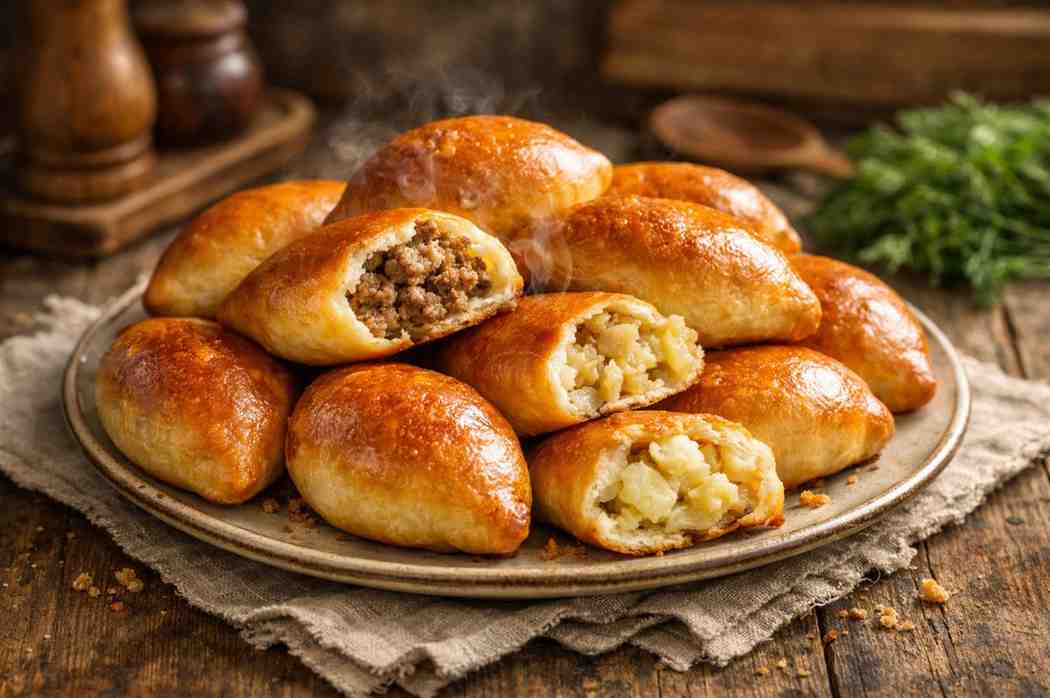
While Norway has Fårikål, Russia has Pirozhki (singular: Pirozhok), small stuffed pastries that are as diverse as the vast country itself. They’re beloved for their portability, versatility, and comforting flavors—perfect for a quick snack, a family meal, or a festive spread.
A Brief History
Pirozhki have been a staple in Russian and Eastern European cuisine for centuries. The word Pirozhki literally means “small pies,” and their origins trace back to the hearty baked goods of rural peasants, who needed affordable, portable food that could sustain them through long workdays. Over time, these pastries migrated from simple farm kitchens to urban bakeries and cafés, becoming a beloved national food.
Ingredients: Sweet and Savory
What makes Pirozhki special is their versatility. The dough is usually soft and slightly sweet, and the fillings can range from savory to sweet. Common ingredients include:
- For the dough:
- Flour
- Yeast
- Milk or water
- Eggs
- Butter or oil
- A pinch of sugar and salt
- Savory fillings:
- Ground beef, pork, or lamb
- Sautéed onions and mushrooms
- Cabbage or potatoes
- Hard-boiled eggs
- Sweet fillings:
- Cottage cheese or farmer’s cheese
- Berries like cherries or blueberries
- Apples or jam
Preparation: Handmade and Heartwarming
Making Pirozhki is a labor of love. The dough is kneaded until soft, left to rise, and then rolled into small portions. Each portion is flattened, filled with the chosen stuffing, and carefully sealed. Depending on tradition or preference, Pirozhki can be baked until golden or fried until crispy.
Frying produces a slightly crunchy exterior with a soft, flavorful interior, while baking yields a tender, fluffy pastry. Either way, the result is irresistibly comforting.
Cultural Significance
Pirozhki are more than just food—they’re a symbol of hospitality and family. In Russian households, they often appear during holidays, family gatherings, and Sunday meals. Street vendors sell them as quick snacks, while bakeries take pride in crafting artisanal versions.
Interestingly, Pirozhki are also found across Eastern Europe and Central Asia, each region adding its own spin. For example, in Ukraine, cabbage and mushroom fillings are common, while in Central Asia, meat-filled pastries dominate.
Fun Facts About Pirozhki
- Pirozhki are considered a portable meal; they were traditionally packed for long journeys and picnics.
- The size of Pirozhki varies, but they’re generally small enough to hold in one hand.
- Sweet Pirozhki are often dusted with powdered sugar, making them a delightful treat for children and adults alike.
- Some modern Russian cafés serve fusion versions, such as Pirozhki with cheese and spinach, or even chocolate-filled desserts.
Why Pirozhki Endures
Pirozhki endure because they’re comforting, customizable, and practical. They appeal to both tradition and innovation—grandmothers’ recipes live alongside modern twists. Each bite tells a story of home, warmth, and culture.
Like Fårikål, Pirozhki is more than a dish—it’s a connection to history and heritage. Whether shared at a family table or bought from a bustling bakery, it carries the flavors and stories of generations.
Final Thoughts
From the slow-cooked, hearty Fårikål of Norway to the versatile, hand-held Pirozhki of Russia, traditional dishes remind us of the power of food to connect, comfort, and celebrate culture. While one warms you from the inside with rich, savory broth, the other delights with a tender, stuffed pastry perfect for any occasion.
Exploring these dishes is not just a culinary journey—it’s a journey through time, tradition, and the heart of a nation.